



Blog
Every Table in Your Office Is Doing a Job. Is It Doing the Right One?

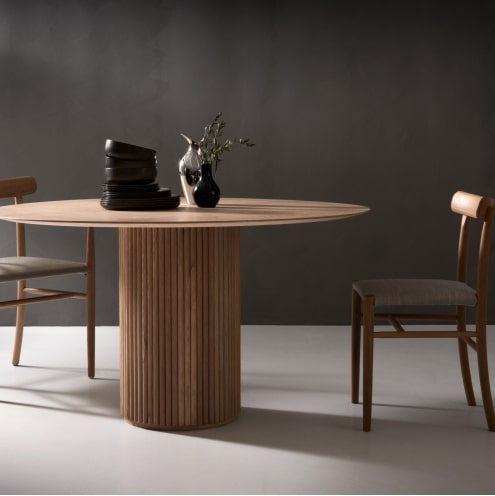
The Table Problem Nobody Talks About
Walk into most offices and you will find tables that were chosen for the wrong reasons. A boardroom table bought because it looked impressive in a showroom, now too large for the room it sits in. Meeting tables that seat twelve when the team rarely exceeds five. A folding table shoved in a corner because nobody thought to ask what the space actually needed.
Furniture is one of the most permanent decisions in a workplace fitout, and tables are the category where mismatches show up most clearly. A desk that does not suit someone can be swapped without disrupting the whole office. A boardroom table that dominates the room, or a meeting table that is constantly being shuffled around because the layout never quite works, affects everyone who uses the space every single day.
This is not an article that tells you which table to buy. It is one that helps you understand what each type of office table is actually for, what happens when the wrong one ends up in the wrong space, and how to make decisions that hold up over time.
Table of Contents
- Why Tables Are Different from Every Other Office Furniture Decision
- Boardroom Tables: The Room Within the Room
- Meeting Tables: The Workhorse of the Modern Office
- Folding and Flip-Top Tables: The Tables That Do More by Doing Less
- Bar Tables: Changing the Posture, Changing the Conversation
- Coffee Tables: The Reception Area’s Most Undervalued Asset
- Side Tables: Small Footprint, Significant Function
- What Ties All of These Decisions Together
- Frequently Asked Questions
Why Tables Are Different from Every Other Office Furniture Decision
Desks are personal. Chairs are personal. Storage is personal. Tables are collective. They are the furniture of collaboration, of meetings, of informal conversations, of the moments in between scheduled work. The decision about what table goes where is a decision about how groups of people will interact with each other in that space.
That makes table selection a more nuanced decision than it often gets treated as. It is not just a matter of size and finish, though those matter. It is a question of what behaviour the table will enable or inhibit. A round table in a meeting room changes the dynamic of who speaks. A high bar table in a breakout zone changes the posture and energy of conversations happening there. A coffee table in a reception area shapes the experience of every visitor before they have said a word to anyone.
Good work design, as defined by Safe Work Australia, considers the physical and social characteristics of a workspace together with the needs of the people who use it. The right table in the right place is not an aesthetic decision. It is a functional and human one.
Boardroom Tables: The Room Within the Room
A boardroom table is the single most visible piece of furniture in an executive space. It anchors the room, sets the tone of every meeting held there, and communicates something about the organisation to every client, partner, or senior hire who sits at it.
The design decisions around a boardroom table have real consequences. Table shape, for instance, is not just aesthetic. A rectangular boardroom table has a head position, which places the most senior person at the top and everyone else arranged in a hierarchy along the sides. This suits formal governance meetings, executive briefings, and any session where authority and direction need to be clearly communicated.
A boat-shaped or oval boardroom table softens that hierarchy slightly. It maintains a defined end position but widens towards the middle, giving more of the table’s length to participants and creating a sense of shared space rather than tiered seating. It is well suited to organisations that want their boardroom to feel authoritative without being rigid.
A round boardroom table, where dimensions permit, eliminates hierarchy entirely. Everyone at the table is equidistant from everyone else. This works particularly well for organisations whose culture prioritises flat collaboration at the leadership level.
- What the size needs to accommodate. Beyond the number of seats, a boardroom table needs to account for the technology in the room. Video conferencing screens, power access points, cable management systems, and presentation equipment all affect where the table sits in the room and how it is configured. Integrated data and power ports built into the table surface have become standard in contemporary boardroom specifications.
- The longevity consideration. A boardroom table is one of the longest-lived pieces of furniture in any office. It is also one of the most photographed. The finish and material should be chosen not just for how it looks today, but for how it will hold up after years of daily use, cleaning, and the occasional scraped chair.
Anchor Your Executive Space
Find configurations suited to executive and corporate environments across a range of sizes and finishes.
Meeting Tables: The Workhorse of the Modern Office
If boardroom tables are for significant occasions, meeting tables are for the daily grind of collaboration. They are used more often, by more people, in more varied configurations. They need to be practical, not just presentable.
The meeting table category spans an enormous range. Small four-person tables in a glass-walled breakout room. Medium eight-seater tables in a formal meeting room. Modular systems that can be pushed together for a large session and separated again for smaller groups. Circular tables that encourage dialogue. Rectangular tables that support a more structured agenda.
- Getting the sizing right. A common mistake in meeting room furniture is oversizing the table. A table that fills the room looks impressive in a sales brochure and creates a crowded, uncomfortable experience in practice. The rule of thumb for meeting table sizing is to allow roughly 600mm of table length per person, with a table width of at least 900mm to allow participants on opposite sides to work comfortably without leaning towards each other. The clearance around the table matters as much as the table itself. A minimum of 900mm between the edge of the table and any wall or fixed element is the practical minimum for chairs to be pushed out and people to move around. Anything less creates a room that functions poorly for its stated purpose.
- Shape and dynamics. Rectangular meeting tables are the most common and the most versatile. They clearly define sides, which suits presentations and structured discussions. Round or square tables work better for smaller groups where dialogue and equal participation are the priority. An oval table is a useful middle ground, particularly for groups of six to eight where a rectangular table would feel overly formal.
Equip Your Team for Collaboration
Explore options suited to a variety of room configurations and team sizes to support everyday productivity.
Folding and Flip-Top Tables: The Tables That Do More by Doing Less
There is a version of office space management that buys dedicated furniture for every possible use, filling storage rooms with pieces that only appear once a month. And there is a smarter version that invests in flexible furniture that earns its place every day.
Folding and flip-top tables are the defining piece in that second approach. When unfolded, they function as full working surfaces for training sessions, workshops, temporary project spaces, or large team meetings. When folded or flipped vertical, they stack against a wall or wheel into storage, reclaiming the floor space for a different purpose entirely.
This is not a compromise. A quality folding or flip-top table can be indistinguishable from a fixed table when in use. The practical difference is that the same room can host a twelve-person workshop in the morning and a yoga session in the afternoon, which matters enormously for organisations managing multipurpose spaces, training rooms, or event facilities.
- What to look for in a folding or flip-top table. The locking mechanism matters more than most buyers realise. A table that feels slightly unstable when extended will undermine confidence in the space it is used in. Look for positive locking systems that engage securely and release cleanly without tools. Castors on flip-top tables should lock firmly and roll smoothly so reconfiguration is fast and easy rather than a two-person wrestle. Surface area per unit and the stacking configuration when stored are equally important. If twenty tables need to fit into a storeroom that accommodates ten, the storage solution has failed regardless of how well the tables work when deployed.
Maximise Your Flexible Spaces
Find dynamic table solutions perfectly suited to training environments, multipurpose rooms, and adaptable workplace layouts.
Bar Tables: Changing the Posture, Changing the Conversation
The addition of a bar table or counter-height table to a workplace is one of the highest-value, lowest-cost interventions available to a workplace designer. It sounds like a small thing. It is not.
Bar tables, typically between 900mm and 1050mm high, shift the body into a semi-standing posture. That shift has a direct effect on the tone and duration of interactions. Standing or perching at a bar height encourages shorter, more energetic exchanges. Decisions get made faster. Conversations are less likely to drift. People are more likely to drop in briefly, contribute, and move on.
This makes bar tables particularly well suited to collaborative zones, casual meeting areas, café-style breakout spaces, and any area where the aim is to encourage informal exchange rather than prolonged seated discussion. They work well beside or beneath high windows, against feature walls, and along kitchen or café bench runs.
- Bar tables and informal stand-ups. The proliferation of standing and walking meetings in contemporary workplace design has created a natural home for bar tables. Teams that do quick daily stand-ups, sprint reviews, or informal check-ins find that the table provides a surface for laptops, phones, and coffee cups without creating the settled, chairs-and-agenda atmosphere of a formal meeting room.
- Pairing with seating. Bar tables work with bar stools or counter-height chairs rather than standard task chairs. The seating height needs to match the table height to prevent uncomfortable posture. A bar table that ends up with standard chairs pushed beneath it quickly becomes a table that nobody uses comfortably.
Energise Your Breakout Zones
Discover high-table options designed to encourage informal collaboration and elevate café-style workplace environments.
Coffee Tables: The Reception Area’s Most Undervalued Asset
Coffee tables in an office context do something that no other table does: they set the emotional tone of the first impression. A visitor waiting in reception is forming an opinion of the organisation before anyone has spoken to them. The seating, the lighting, the materials, and the coffee table in front of them are doing the work of first impression while they wait.
A well-chosen coffee table in a reception area signals that the organisation pays attention to detail. A cheaply finished table, or one that is the wrong height for the surrounding seating, signals something else entirely.
Beyond reception areas, coffee tables appear in executive waiting areas, informal lounge zones, break rooms, and collaboration spaces where the intent is to create a relaxed, social atmosphere. They are the furniture of informal conversation, the table you have when you do not want the conversation to feel like a meeting.
- Height and proportion. Office coffee tables should sit between 400mm and 450mm high for use alongside standard sofa-height seating. The table should be proportionate to the seating arrangement around it. A very small coffee table in the centre of a large sofa cluster looks lost and is functionally useless. A very large table in a tight seating arrangement prevents people from sitting naturally.
- Materials and finish in a commercial context. Coffee tables in commercial environments take a different kind of punishment than those in a home. Cups without coasters, bags dropped on the surface, people perching on edges rather than using the furniture as intended. A commercial-grade finish that resists marking and cleans easily is worth prioritising over a surface that looks more impressive in the showroom but deteriorates under use.
Make the Right First Impression
Explore durable and stylish low tables perfect for reception lounges and comfortable, informal collaboration zones.
Side Tables: Small Footprint, Significant Function
Side tables are the furniture category most likely to be added as an afterthought and most likely to prove their worth within the first week. They exist to solve a specific and surprisingly common problem: people need somewhere to put things when the main table surface is occupied, out of reach, or does not exist.
In a reception area, a side table beside a sofa gives waiting visitors somewhere to rest a bag, a phone, or a coffee cup without having to balance it on their knee. In an executive lounge, a side table at the end of a sofa adds a landing spot for devices and cups. In a meeting room with a central table that fills most of the floor space, a side table near the door provides somewhere to put a coat and bag without piling things on chairs.
The side table is a supporting player. Its job is to make the primary furniture in the room work better. It should be chosen to complement the main pieces in scale, material, and finish. A side table that draws attention to itself has failed at its job.
Complete the Space with Functional Support
Find the ideal supporting surfaces to complement your reception areas, executive lounges, and meeting rooms.
What Ties All of These Decisions Together
Every table type described above exists to serve a specific set of human interactions. The boardroom table serves governance and authority. The meeting table serves collaboration and deliberation. The folding table serves flexibility and efficiency. The bar table serves energy and informality. The coffee table serves comfort and first impressions. The side table serves convenience and support.
When the wrong table ends up in a space, the mismatch is usually felt before it is named. The meeting room that feels too formal for the conversations it hosts. The boardroom that feels cramped and uncomfortable. The breakout area that never gets used because the furniture does not invite the kind of interaction it was designed to support.
Getting the right table into the right space is not a matter of budget. It is a matter of understanding what the space needs to do, who will use it, and what kind of interactions you want it to encourage.
Find the Perfect Tables for Your Entire Office
Whether you need to outfit a boardroom, a flexible training space, or a casual reception lounge, discover our comprehensive range.
Frequently Asked Questions
How do I choose the right size boardroom table for my room?
Measure the room first and work backwards. Allow a minimum of 900mm clearance on all sides of the table for chairs and circulation. Subtract those clearances from your room dimensions to find the maximum table size. For a room that is 6m by 4m, for instance, the usable table area is roughly 4.2m by 2.2m. Then factor in seating, allowing approximately 600mm of table length per person on each side.
What is the difference between a meeting table and a boardroom table?
The distinction is primarily one of scale, formality, and context. Boardroom tables are typically larger, more formally finished, and sit in a dedicated space used for executive-level meetings and governance. Meeting tables are more versatile, available in a wider range of sizes, and suited to everyday collaboration across teams. Many meeting tables are also more easily reconfigured than boardroom tables.
Are folding tables appropriate for professional environments?
Quality flip-top and folding tables are entirely appropriate for professional settings. The key is choosing a commercial-grade product with a stable locking mechanism and a surface finish that matches the quality of the rest of the space. A well-specified folding table in a training room or multipurpose space performs as well as a fixed table and gives the room far greater versatility.
How high should a bar table be?
Standard bar tables sit between 900mm and 1050mm from the floor. Counter-height tables are typically 900mm to 950mm. Bar-height tables run from 1000mm to 1050mm. The seating paired with the table needs to match the height, so confirm the chair or stool height before ordering the table.
What should I look for in a commercial coffee table finish?
For commercial environments, prioritise scratch resistance, ease of cleaning, and durability over purely aesthetic appeal. Melamine, tempered glass, and powder-coated steel are among the most practical finishes for high-traffic commercial settings. Soft stone veneers and laminates can look excellent but require more careful handling in environments where heavy daily use is expected.
Can I mix different table types in one open-plan area?
Yes, and this is increasingly common in well-designed workplaces. A combination of low coffee tables in a lounge zone, bar tables in a standing collaboration area, and standard-height meeting tables in a more structured zone creates a space with multiple options for different types of interaction. The key is ensuring there is visual coherence across the different table types in terms of finish and material palette.
How often should office tables be replaced?
Commercial-grade office tables, properly maintained, should last ten to fifteen years without significant degradation. Cheaper tables in high-traffic environments may show wear significantly sooner. The decision to replace is usually driven by changes in workplace layout, team size, or functional requirements rather than by the table’s structural condition.


