



Blog
What Your Reception Counter Is Really Saying About Your Business

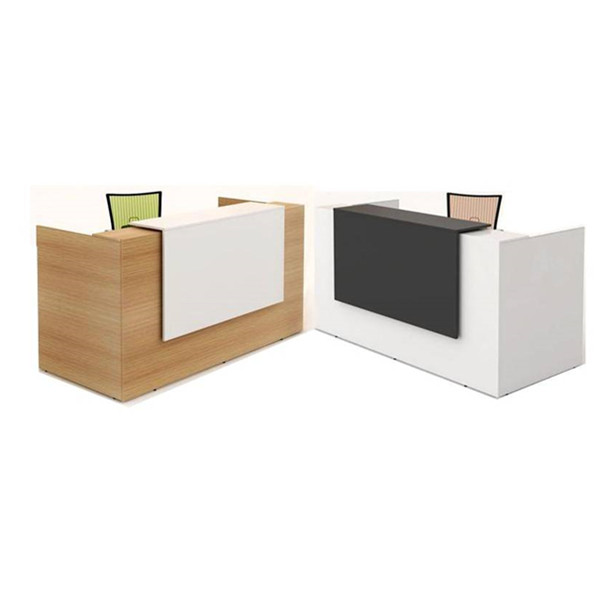
The Moment Before Anyone Speaks
Before a visitor makes eye contact with your receptionist, before a word is exchanged, and before a seat is offered, they have already formed an opinion. They walked in, looked ahead, and took in the reception counter. Its height, its finish, and the way it sits in the space. They notice whether it looks intentional or incidental, and whether it looks like it belongs.
That snap judgement happens in roughly seven seconds. It is not rational and it is not negotiable. It is simply how first impressions work.
The point of this article is not to tell you to spend more on your reception counter. It is to help you think more clearly about what your current setup is communicating, what you actually need it to do, and how to make a decision that holds up for years rather than just looks good in a product photo.
Table of Contents
- What a Reception Counter Actually Does
- Reception Counters Are Not One-Size Products
- Counter Height and What It Communicates
- The Small Reception Counter: Making Less Work Harder
- The Case for Custom Reception Counters
- Reception Counters Melbourne: What the Market Expects
- Matching the Counter to the Rest of the Space
- What to Confirm Before You Order
What a Reception Counter Actually Does
Most conversations about reception desks focus on appearance. That is understandable, but it skips over the functional reality that a reception counter desk has to serve simultaneously as a working environment for the person behind it and as a boundary, anchor point, and navigational cue for everyone who walks through the door.
A well-configured counter handles both. It gives the receptionist enough surface area, storage, and ergonomic comfort to manage a full working day without strain. It creates enough visual presence that visitors know immediately where to go. And it does both without making the space feel institutional, cramped, or chaotic.
Getting that balance right is the real design challenge. A desk that works perfectly for the person behind it but reads as a barrier from the front has failed. A desk that looks spectacular but lacks adequate storage or cable management will create frustration within weeks.
Reception Counters Are Not One-Size Products
One of the most common mistakes in fitting out a reception area is approaching it as a standard furniture purchase. Reception desks and counters come in a wider range of configurations than almost any other piece of office furniture, and for good reason. The needs of a boutique accountancy firm in South Yarra are meaningfully different from those of a medical centre in Footscray, a law firm in the CBD, or a busy trade business with foot traffic all day.
Some of the variables that should shape your decision include:
- Visitor volume. A counter serving one or two visitors an hour has different spatial and functional requirements than one managing a constant flow. Higher-volume settings typically need longer surfaces, dedicated areas for signing in and waiting for assistance simultaneously, and more thought given to queuing space in front of the counter.
- Number of staff behind the counter. A single receptionist working independently needs a different configuration than two people sharing a counter and managing separate lines of work. Shared counter setups need clearly delineated zones so each person has usable working space without encroaching on their colleague.
- Technology requirements. Most reception counter desks now need to accommodate at least one monitor, a keyboard, a phone system, and sometimes a second screen for visitor sign-in or wayfinding. Cable routing and the position of monitor risers affect ergonomics significantly. A counter that was not designed with technology integration in mind often ends up with cables running across the surface or screens positioned at angles that create fatigue.
- Storage needs. Parcel deliveries, mail, visitor badges, sign-in books, stationery, keys. Reception areas accumulate more incidental material than almost any other zone in a workplace. Drawers and concealed storage that are accessible from the working side make a measurable difference to how tidy and functional the space stays across the day.
- Accessibility. Disability Discrimination Act (DDA) compliance requires reception counters in many commercial settings to include a lower section accessible to visitors using wheelchairs. This is not just a legal consideration. An accessible counter signals to visitors that your business considers all of them equally, which matters for how your brand is perceived.
Counter Height and What It Communicates
Reception desk counter height is one of the most overlooked design decisions in office fitouts, and it carries more meaning than most people realise.
A high counter, typically 1050mm to 1100mm, creates separation. It positions the receptionist above eye line for seated visitors and adds a degree of formality. This works well in environments where the counter serves a gatekeeping function, such as legal firms, government offices, high-security settings, or anywhere that managing access is a primary requirement.
A mid-height counter, around 750mm to 900mm, creates more of a collaborative and open dynamic. It is more approachable and visually lighter. It works particularly well in creative studios, design agencies, technology businesses, and hospitality settings where the brand relies on warmth and accessibility.
A split-level counter, with a higher transaction surface on the visitor side and a standard working height for the receptionist, offers the most ergonomic outcome for the person working there while maintaining a professional visual presence. This configuration is increasingly common in well-considered fitouts because it prioritises the actual working conditions rather than just the visual impact.
Safe Work Australia recommends that workstations be designed to allow workers to vary their posture and avoid static positions for extended periods. For receptionists who spend most of their working day at the counter, height-adjustable configurations or access to a sit-stand position are worth serious consideration.
The Small Reception Counter: Making Less Work Harder
Not every business has the luxury of a large foyer or a dedicated reception zone. Plenty of offices, studios, clinics, and practices work with tight, awkward, or irregular spaces where a standard counter reception simply does not fit.
A small reception counter is not a compromise. Configured well, it can deliver everything a larger unit does within a fraction of the footprint. The key is prioritising ruthlessly.
In a compact counter setup, surface area is at a premium, so every centimetre of it needs to earn its place. Monitors should be wall-mounted where possible to free the desktop. Storage should be vertical where floor space is limited. The counter shape should be chosen to align with the room’s natural circulation rather than fighting against it. An L-shaped or curved small reception counter can often use corner space that a straight counter would leave dead.
The visual weight of the piece matters more in a smaller space. A bulky, dark counter in a small entry will make the space feel oppressive. Lighter finishes, slimmer profiles, and transparent or reflective elements can help a compact counter reception feel considered rather than constrained.
The Case for Custom Reception Counters
Off-the-shelf reception counters work well for many businesses. But there are situations where a standard product simply cannot do what the space requires.
A custom reception counter becomes the right decision when:
- The space has unusual dimensions, angles, or structural elements that a standard unit cannot accommodate cleanly. Trying to force a rectangular counter into an angled or curved space always looks like exactly what it is.
- The brand requires a specific material, colour, or finish that is not available in standard ranges. A counter in a heritage law firm has different material requirements than one in a contemporary architecture practice, and neither should be forced to compromise.
- The counter needs to serve multiple functions simultaneously, combining a transaction surface, integrated display screens, parcel storage, secure document handover, and after-hours call management in a single piece.
- The business is planning long-term and wants a fitout that will last a decade without looking dated. Custom joinery, done well, ages significantly better than flat-pack alternatives.
A custom reception counter is also an opportunity to integrate branding directly into the furniture. A raised logo, a brand-coloured panel insert, or a signature material finish makes the counter a deliberate brand statement rather than furniture that happens to be in the reception area.
You can browse the full range of reception desks at Abbotts Office Furniture to see what configurations are available across both standard and custom options.
Reception Counters Melbourne: What the Market Expects
Melbourne’s commercial fitout culture sits at a particular intersection of design consciousness and practical expectation. Businesses in Melbourne, particularly in the CBD, Southbank, Fitzroy, Richmond, and St Kilda Road precincts, tend to have a sharper eye for interior detail than in many other Australian cities. Visitors and clients in these environments notice when something looks off.
Reception counters Melbourne businesses invest in tend to share a few common qualities. Clean, resolved joinery without unnecessary ornamentation. Finishes that feel premium without being ostentatious. Configurations that work with open-plan layouts while still delineating the front-of-house zone clearly. And dimensions that allow the space around the counter to breathe, with enough clear floor on the visitor side to avoid the counter feeling like a wall.
If you are fitting out a reception area in Melbourne and are uncertain whether a standard range product will hold up visually against the space, talking to a supplier who can advise on custom reception counter options is worth the time before committing to a standard unit.
Matching the Counter to the Rest of the Space
A reception counter desk that was purchased independently of the rest of the fitout is usually visible as exactly that. The finish is slightly different, the proportions feel unrelated, and the height does not align with the adjacent wall joinery. The overall effect is a space that looks assembled rather than designed.
The strongest reception areas treat the counter as the centrepiece of a considered zone. The wall behind it, the floor treatment leading to it, the signage above it, the seating alongside it, and the lighting over it are all part of the same visual conversation.
This does not require a large budget. It requires thinking about these elements together rather than separately. A counter chosen in isolation, even an expensive one, rarely lands as well as one chosen in the context of the full space.
What to Confirm Before You Order
Whether you are buying a standard reception desk counter or commissioning a custom piece, these are the key questions worth confirming before you commit:
- What are the exact dimensions of the space, including ceiling height, any fixed structural elements, and the available floor area in front of the counter for visitors?
- What technology will sit on or within the counter, and has the electrical and data infrastructure been planned around the counter position?
- Does the space need an accessible lower counter section for DDA compliance?
- How many people will work behind the counter simultaneously, and does the configuration give each of them adequate, clearly defined workspace?
- What is the expected foot traffic, and does the counter size and visitor-side depth accommodate that volume comfortably?
- What is the finish, and how will it hold up to daily handling, cleaning products, and incidental contact over a five-to-ten-year lifespan?
Make the Right First Impression
For businesses that need help working through these decisions, the team at Abbotts Office Furniture can advise on the right configuration and finish for your space and budget. From standard ranges to fully custom pieces, we have you covered.


