



Blog
Drafting Stools & Drafting Chairs: The Complete Buyer’s Guide

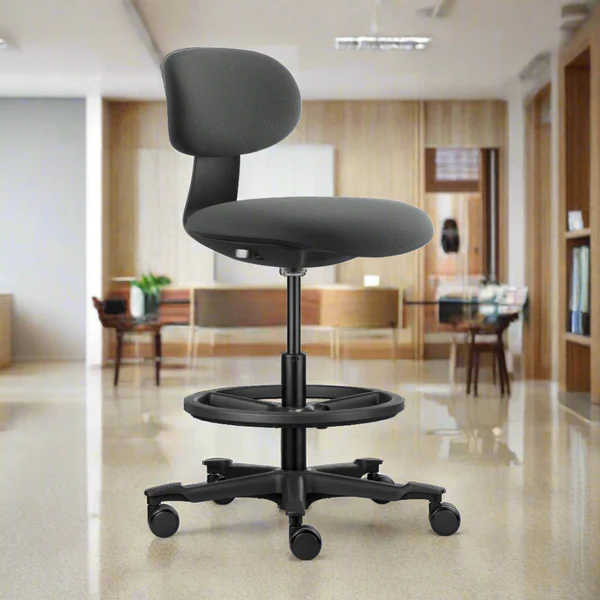
If you work at a standing-height desk, a drafting table, a laboratory bench, or a creative studio, a standard office chair simply won’t cut it. The seat is too low, the footrest is non-existent, and within an hour your posture is suffering for it. That’s exactly the problem drafting stools and drafting chairs are designed to solve.
Whether you’re an architect poring over plans, an artist working at an elevated easel, a healthcare professional at a treatment bench, or someone who just added a sit-stand desk to their home office, this guide covers everything you need to know to choose the right drafting stool for your workspace.
Browse our full range of drafting chairs and drafting stools at Abbotts, or read on to make a well-informed decision.
Table of Contents
What Is a Drafting Stool?
A drafting stool is a height-adjustable seat specifically engineered for use at elevated surfaces like drafting tables, standing desks, high benches, and counter-height workstations that sit above the standard desk range of 68 to 75 cm.
Unlike a conventional office chair, which typically adjusts between 43 to 55 cm in seat height, a drafting stool can reach heights of 60 cm and above. Most quality models also include a built-in footrest ring, which becomes essential once your feet can no longer comfortably rest on the floor.
The key distinguishing features of a drafting stool are:
- Extended height range: typically 60 to 85 cm seat height, compared to 43 to 55 cm for standard office chairs.
- Integrated footrest ring: provides support for legs and feet when seated high.
- 360° swivel: enables freedom of movement across a wide work surface.
- Pneumatic gas lift: for smooth, easy seat height adjustment.
- Compact, streamlined profile: suited to the focused, task-oriented nature of elevated work.
Some drafting stools are closer to backless stools, being minimal, simple, and highly mobile. Others are full drafting chairs with backrests, lumbar support, and armrests. Both have a place depending on your working style and how long you’ll be seated.
Who Uses Drafting Stools?
Drafting stools serve a surprisingly wide range of professionals and creatives. You’ll find them in:
Architecture and Design Studios: The original use case. Architects, draftspeople, and designers working at large-format drawing boards or technical drawing tables need a seat that brings them to the right height and allows them to pivot and lean freely across the surface.
Creative Studios and The Artist Stool: For painters, illustrators, sculptors, and mixed-media artists working at elevated easels or studio benches, a well-chosen artist stool is essential equipment. Artists typically need a stool with good height range, a stable footrest, and enough mobility to step back and assess their work without constantly getting up. Many artists prefer a backless or low-back stool to avoid any restriction on upper body movement.
Laboratories and Healthcare: Lab technicians, pathologists, pharmacists, and clinical staff who work at bench-height surfaces throughout long shifts rely on drafting stools to maintain correct posture and reduce lower-limb fatigue. In these environments, ease of cleaning and durable materials are often as important as ergonomic features.
Standing Desk Users: As sit-stand desks have become mainstream in Australian workplaces and home offices, the demand for complementary drafting stools has grown alongside them. When a sit-stand desk is raised to standing height, a drafting stool allows the user to adopt a supported, semi-seated position, taking the load off the legs without returning the desk to sitting height. This is particularly useful for tasks requiring close, detailed concentration.
Retail and Hospitality: Counter staff, bar staff, and retail workers who spend hours at elevated service counters benefit enormously from access to a quality drafting stool during quieter periods.
Key Features to Look for in a Drafting Stool
Height Adjustability
This is the non-negotiable starting point. Measure your work surface height, then confirm the stool’s seat height range covers that dimension with enough room for your legs to sit comfortably beneath the surface. For most drafting tables and standing desks, you’ll want a stool that can reach at least 70 to 80 cm.
Footrest Ring
An integrated adjustable footrest ring is essential for any elevated seating. Without one, your feet dangle freely, cutting off circulation, increasing lower back strain, and creating fatigue much faster than you’d expect. A good footrest ring should be independently height-adjustable so it can be positioned correctly regardless of the seat height you choose.
Backrest and Lumbar Support
Drafting stools range from completely backless (better for mobility and freedom of movement) to high-back drafting chairs with full lumbar and thoracic support. For short-duration, creative tasks like illustration or sculpting, a backless artist stool is often preferred. For long-duration tasks like data entry at a sit-stand desk, laboratory work, or detailed design, a backrest with lumbar support significantly reduces fatigue and the risk of lower back discomfort.
Safety note: Safe Work Australia’s guidance on preventing musculoskeletal disorders in the workplace highlights that sustained awkward postures, including unsupported sitting at incorrect heights, are a leading cause of work-related musculoskeletal issues. The right drafting stool directly addresses this risk.
Seat Material and Comfort
For shorter work sessions, a simple foam or contoured seat is generally adequate. For extended use, particularly in office or laboratory environments, look for higher-density foam, breathable mesh, or upholstered seating with appropriate padding. Consider also how easy the seat material is to clean, particularly in clinical, food-handling, or studio environments where spills are common.
Base and Castors
Most drafting stools come on a five-point star base with castors, allowing easy movement across a workspace. In environments where mobility could be a hazard, like laboratory floors, polished concrete, or on-grade tiles, consider whether locking castors or a static glide base might be more appropriate.
Armrests
Not all drafting chairs include armrests, and not all tasks benefit from them. For fine motor work such as drawing, illustration, and detailed assembly, armrests can restrict movement. For general-purpose elevated desk work, armrests provide welcome support and reduce neck and shoulder tension. Many of our drafting chairs offer the option of armrests or no armrests to suit your preference.
Drafting Stool vs Drafting Chair: What’s the Difference?
The terms are often used interchangeably, but there is a practical distinction worth understanding.
A drafting stool typically refers to a simpler, backless or low-back seat on a tall gas-lift base with a footrest ring. These are compact, lightweight, and highly manoeuvrable, making them ideal for creative tasks, short-duration use, or situations where freedom of movement is prioritised over extended support.
A drafting chair generally refers to a taller, more fully-featured seat, comparable in structure to an ergonomic task chair, but engineered for elevated surfaces. These chairs include a full backrest, adjustable lumbar support, armrests, and a footrest ring, and are designed for professionals who spend long stretches seated at elevated workstations.
Both have a clear place in the right context. The choice comes down to your tasks, your working duration, and your personal preference for support versus mobility.
Artist Stools: What to Look for Specifically
An artist stool sits in a particular sweet spot. It needs to be tall enough to work at an elevated easel or studio table, stable enough to support confident work, and open enough not to restrict the upper body movements that creative work demands.
Key priorities for an artist stool:
- A height range that comfortably reaches your working surface, whether that’s a drafting table, a high easel, or a light table.
- A stable, non-wobbly base, as nothing disrupts concentration like a stool that shifts under you.
- A footrest ring at an adjustable height so you can plant your feet comfortably.
- A seat shape and material that doesn’t cause discomfort during long creative sessions.
- Easy swivel so you can step back to assess your work and return to the correct position.
Many artists prefer backless stools because they allow full upper body freedom. Others, particularly those working on detailed close-up illustration, benefit from a low backrest that provides lumbar support without restricting shoulder movement.
Choosing the Right Drafting Stool for Your Industry
| Environment | Recommended Style |
|---|---|
| Architecture / Technical Drawing | Full drafting chair with lumbar support and armrests |
| Art / Illustration Studio | Backless artist stool or low-back drafting stool |
| Laboratory / Healthcare | Easy-clean upholstered drafting stool, static base optional |
| Sit-Stand Desk (Office) | Mid-back drafting chair with footrest and lumbar support |
| Retail / Hospitality Counter | Simple backless drafting stool, easily moved |
| Home Office (Occasional Use) | Mid-range drafting stool with backrest |
Ready to Get Your Office Right?
Abbotts Office Furniture is your specialist for commercial and home office furniture. We have been helping Australian businesses and individuals create functional, comfortable workspaces for over 35 years. Explore our ergonomic chairs, sit-stand desks, meeting tables, storage solutions, and accessories. Our experienced team provides genuine, qualified advice to help you build a workspace that performs.


