



Blog
Why Investing in Quality Office Furniture Pays Off

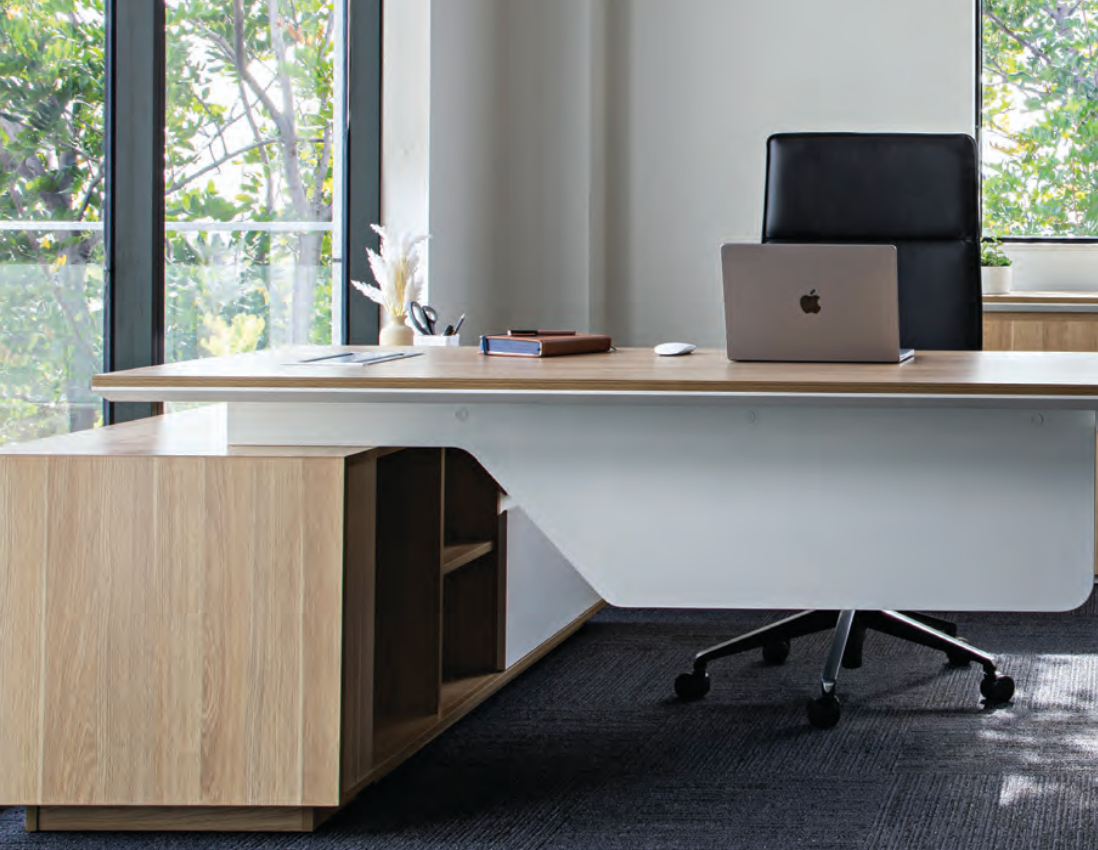
Poor furniture is quietly costing Australian businesses billions. Here is the case, backed by the numbers, for doing something about it.
Table of Contents
- Your Team Cannot Do Their Best Work in an Uncomfortable Chair
- It Directly Reduces Absenteeism
- The Real Cost of Cheap Furniture Is Higher Than the Sticker Price
- Your Office Environment Shapes How People Perceive Your Business
- Modern Workplaces Need Furniture That Can Keep Up
- Smart Storage and Workspace Organisation Are Underrated
- The Accessories That Complete the Picture
- What to Prioritise When You Are Ready to Invest
When it comes to running a business, the big ticket decisions tend to get all the attention: software, staffing, marketing budgets, and office leases. Furniture? That is usually an afterthought. It is seen as something to sort out quickly, spend as little on as possible, and move on from.
But here is the reality: the chair your team member sits in for eight hours a day has a more direct effect on their concentration, their health, and their likelihood of showing up tomorrow than almost any other physical element of their working environment. And in Australia, where back pain alone costs employers an estimated $8.15 billion in lost earnings and productivity each year, the cost of getting this wrong is anything but trivial.
Quality office furniture is not a luxury. It is a practical investment. It pays back in ways most business owners do not fully account for until they start adding up sick days, staff turnover, and replacement costs on budget furniture that did not survive its second year.
of workers report discomfort from their office furniture setup
lost annually by Australian employers to back pain and injuries
more likely to stay when the workplace is thoughtfully designed
Your Team Cannot Do Their Best Work in an Uncomfortable Chair
Discomfort is a productivity killer that does not announce itself. It does not show up as a missed deadline or a failed project. Instead, it shows up as a slight but constant distraction, a drift in focus, and a creeping unwillingness to settle in and do deep work. According to multiple studies, this is happening across the majority of Australian workplaces right now.
When an employee spends most of their day sitting in front of a screen, the quality of their seating is not incidental. It is foundational. Ergonomic chairs are specifically engineered to support the natural curve of the spine, allow for posture adjustments throughout the day, and reduce the muscular fatigue that sets in during long periods of desk work. The difference between a well fitted ergonomic chair and a generic budget seat is not just about comfort. It is about sustained attention, which is what actually drives output.
“When employees are comfortable, they are able to focus for longer periods and get the job done. Ergonomic chairs, height adjustable desks, and standing desk converters are among the most effective investments for employee morale, comfort, and productivity.”
The same principle applies to desks and workstations. Staff who spend hours hunched over a fixed height desk that does not suit their frame are not working at full capacity. They are managing discomfort. Sit stand desks and height adjustable workstations give people the flexibility to move throughout the day, reducing the pressure on the spine that comes with prolonged sitting and keeping energy levels more consistent across the afternoon.
It Directly Reduces Absenteeism
Neck pain, back pain, and shoulder tension. These are among the most common reasons Australians take sick leave. They are also among the most preventable when workplace ergonomics are taken seriously. An estimated 41% of workers report that their office chair causes them physical pain. That is not a minor inconvenience. That is a large proportion of your workforce dealing with a recurring physical problem at work, every single day.
The connection to absenteeism is straightforward: employees in physical discomfort take more sick days. But the more insidious cost is presenteeism, which means showing up to work while unwell or in pain and operating at a fraction of normal capacity. This is harder to measure but arguably more damaging because it does not show up clearly in your absence records.
Investing in proper ergonomic seating and well designed workstations does not eliminate all health issues, but it meaningfully reduces the ones that originate from the workplace itself. That is a preventable cost, and preventing it is well within reach for most businesses.
Australian compliance note: As an employer, you have a legal obligation under work health and safety law to provide a safe working environment as far as reasonably practicable. Ergonomic furniture that meets AFRDI certification standards is the benchmark for compliant, durable seating in Australian workplaces. When purchasing chairs, always check for AFRDI certification and relevant weight ratings.
The Real Cost of Cheap Furniture Is Higher Than the Sticker Price
Budget furniture looks appealing on a spreadsheet. The upfront outlay is low, and it gets the office functional quickly. But the hidden costs accumulate fast, and they tend to be invisible until they have already done real damage.
Cheap materials wear out quickly. Chairs that are not built to Australian commercial standards develop faults: gas cylinders fail, foam compresses beyond support, armrests crack or collapse. Desks with inadequate load ratings bow and wobble within a year or two. What seemed like a cost saving decision in year one becomes a replacement purchase in year two, and another in year three. Over a five year window, the total outlay on budget furniture often significantly exceeds what a quality piece would have cost at the outset.
There is also the residual value consideration. High quality office furniture from reputable manufacturers retains its value. When it is time to refit your office or downsize, well maintained premium pieces can be resold or repurposed. Budget furniture has no resale value; it goes straight to landfill. For businesses with sustainability commitments, that matters too.
- Durability: Quality office furniture typically lasts 7 to 10 years or more under normal commercial use, far outlasting budget alternatives.
- Fewer replacements: Less frequent purchasing means lower total cost of ownership over any multi year period.
- Residual value: Premium pieces retain value and can be resold or redeployed when your needs change.
- Sustainability: Durable furniture means less waste, which is an increasingly important consideration for businesses with ESG commitments.
- Compliance: Certified furniture protects you from workplace health and safety liability.
Your Office Environment Shapes How People Perceive Your Business
This point is easy to dismiss until you consider the evidence. Research consistently shows that the physical environment of a workplace influences how both employees and clients perceive the business operating within it. Sixty per cent of customers say a business’s interior design influences their decision to buy from them. Furthermore, employees are three to four times more likely to stay in their roles when their workplace is thoughtfully designed.
None of this requires a lavish interior fit out. It requires deliberate choices. Furniture that reflects the standards your business holds itself to, and a workspace that communicates care for the people who spend their days in it. When a client walks into a reception area and sits down in a well crafted lounge chair at a properly finished table, they draw conclusions about your organisation. Those conclusions work in your favour.
Conversely, a tatty chair or a desk with a swollen veneer edge sends its own negative message. In a service business or professional environment where perception is part of the product, that is a risk worth taking seriously.
Modern Workplaces Need Furniture That Can Keep Up
The Australian office has changed significantly over the past few years, and it is still changing. Hybrid work is now the norm rather than the exception for many businesses. This means offices are used differently than they were: more collaborative zones, more flexible configurations, fewer assigned desks, and more shared workstations. Furniture that was purchased for a static, pre pandemic layout may already be misaligned with how your team actually operates.
The latest generation of commercial office furniture is designed with this in mind. Modular desks and workstations can be reconfigured without specialist help. Mobile storage units follow the team rather than anchoring to fixed positions. Reconfigurable meeting tables adapt to a boardroom one day and a training setup the next. This flexibility reduces the need for complete fit out replacements every time your business model shifts. In the current environment, that is a genuine advantage.
Hybrid compatibility is particularly worth considering if your team moves between home and office setups. Standardising furniture styles and ergonomic specifications across environments reduces adjustment time and ensures employees are just as comfortable and effective at their desk at home as they are in the office.
Smart Storage and Workspace Organisation Are Underrated
Office space in Melbourne is expensive. Every square metre carries a cost, which means that how efficiently your furniture uses available space has a direct financial dimension. Cluttered, poorly organised workspaces do not just look untidy. They reduce focus, increase time spent searching for materials, and add friction to everyday tasks.
Vertical storage systems, under desk storage units, and multifunctional furniture pieces allow businesses to do more with less floor space. Filing and storage solutions that integrate with your desk layout, rather than sitting as afterthought additions in the corner, create a cleaner and more efficient working environment. And when your team is not wasting time navigating a chaotic workspace, they are spending that time working.
It is also worth considering the human dimension of a well organised office. People do better work, and feel better about the work they are doing, in environments that feel ordered and considered. The relationship between physical environment and cognitive performance is well established. A clutter free space is not just aesthetically preferable; it actively supports the kind of focused, sustained concentration that drives quality output.
The Accessories That Complete the Picture
Ergonomics does not begin and end with the chair. The supporting elements of a workstation, such as monitor positioning, keyboard and mouse placement, lighting, wrist rests, and footrests, all contribute to whether a person can maintain a healthy posture and comfortable working position throughout the day.
Monitor arms, for example, allow screens to be positioned at the exact height and distance that suits an individual’s height and eyeline. This is something a fixed monitor stand simply cannot achieve. Keyboard trays enable proper forearm positioning and reduce wrist strain. Acoustic panels create quieter, more focused working zones in open plan offices where noise is a constant source of distraction.
These accessories are often the last things businesses think to budget for, yet they are frequently the finishing touch that makes a properly set up workstation genuinely comfortable rather than just adequate. When you are investing in quality furniture, it is highly recommended to extend that thinking to the accessories that complete the setup.
What to Prioritise When You Are Ready to Invest
Not every business is in a position to replace everything at once. If you are working with a limited budget, the best approach is to prioritise by impact. These are the areas where quality investment delivers the fastest return:
- Ergonomic seating first. The chair is where the biggest health and productivity gains live. If your team is sitting in unsupported, non adjustable seats, this is the highest priority upgrade. Look for adjustable lumbar support, height adjustment, and AFRDI certification.
- Sit stand desk capability. Even one or two height adjustable workstations can make a meaningful difference. As the budget allows, extending this across the team is a worthwhile goal.
- Storage and organisation. Replacing disorganised, overcrowded filing systems with purpose built storage pays dividends in time and focus every single day.
- Meeting and collaborative spaces. As hybrid work continues to reshape how teams use the office, investing in flexible meeting furniture makes the time spent in the office more valuable.
- Ergonomic accessories. Monitor arms, footrests, and wrist rests are a low cost, high impact complement to a quality workstation setup.
If you would like help assessing your current setup and identifying where the gaps are, the team at Abbotts can walk you through the options. We do not take a one size fits all approach. Every workspace is different, and the right furniture for your business depends on how your team works, how your space is configured, and what you are trying to achieve.
Ready to Get Your Office Right?
Abbotts Office Furniture is Melbourne’s specialist for commercial and home office furniture. Explore our ergonomic chairs, sit stand desks, meeting tables, storage solutions, and accessories. Our experienced team provides genuine, qualified advice to help you build a workspace that performs.


